Self-Balancing Robotic Tray
Kitau Robotics service-robot waiter platform
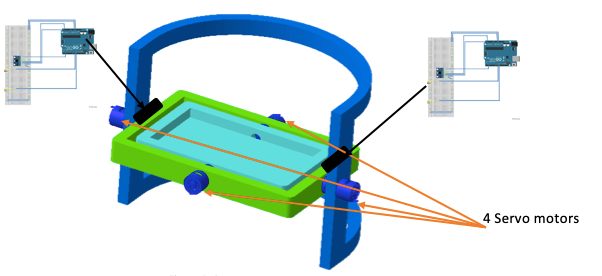
Designed and prototyped a self-balancing tray for a service robot waiter so food could be transported without slippage. Combined CATIA V5 mechanical design, Arduino Uno control, and disturbance testing with variable payload weights.
The Core Challenge
Engineering Solution & Implementation
Modelled the tray in CATIA V5, manufactured the design, and implemented hardware around an Arduino Uno for disturbance testing. Used QFD, morphological analysis, Pugh matrices, FMEA, and CES material selection. Control work covered open-loop, closed-loop, and PID. Supervisor: Dr James E. Pickering, Senior Lecturer in Control Systems Engineering.
Verified Outcomes & Deliverables
Designed and manufactured a working self-balancing tray prototype.
Programmed an Arduino Uno to test the system under disturbances.
Validated the product with different payload weights.